Bottom line
Claude's watermark is provenance evidence, not an authorship, ownership, or accuracy verdict. Editorial records and reader-facing disclosure remain separate responsibilities.

AI TOOLS
What Claude's text watermark can detect, why short or edited passages are difficult, how translation works, and when visible AI disclosure may still be needed.
Read the related Korean article →Claude's watermark is provenance evidence, not an authorship, ownership, or accuracy verdict. Editorial records and reader-facing disclosure remain separate responsibilities.
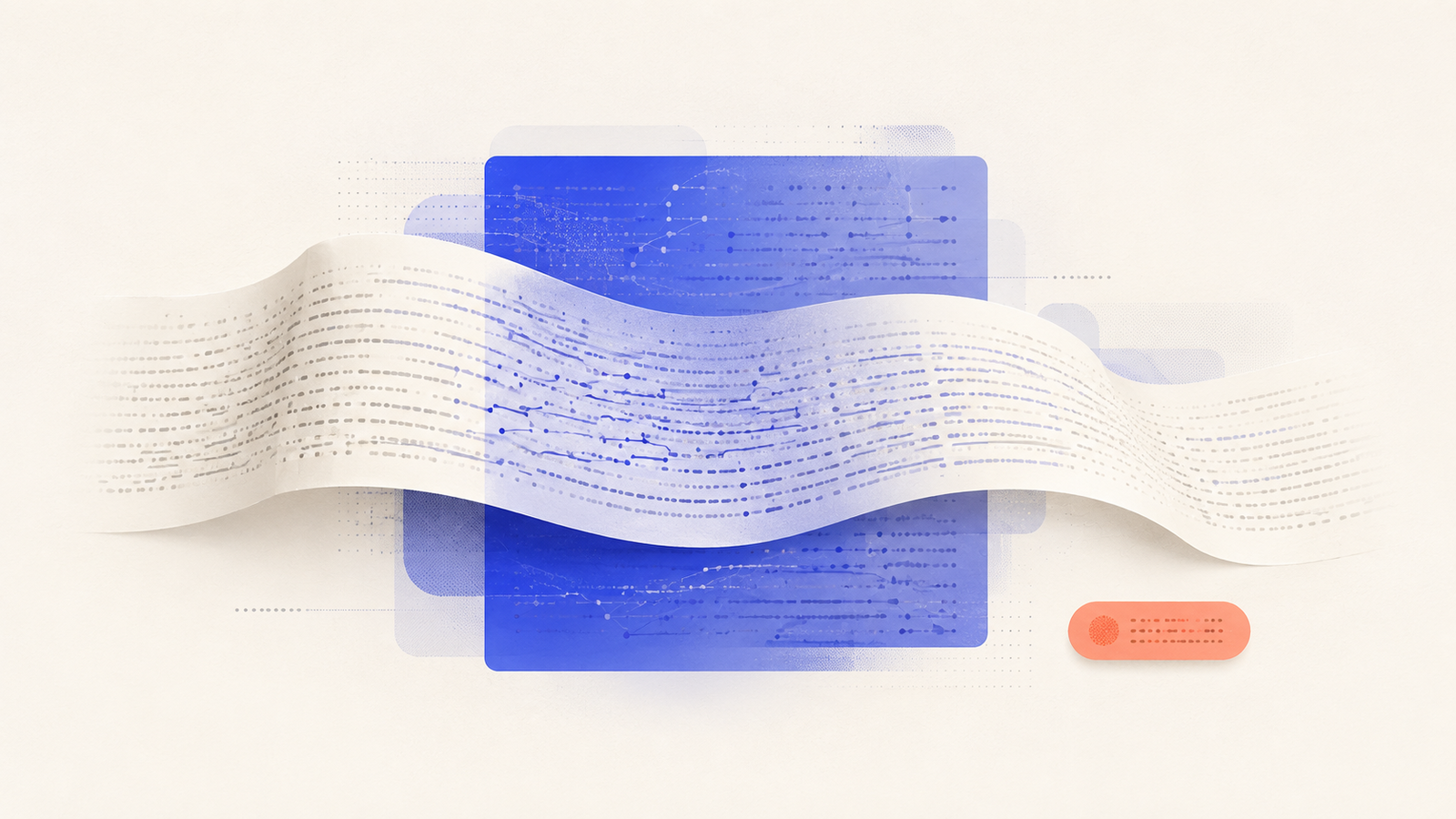
Claude's text watermark is not a label attached to the end of a response. When the model has several acceptable next words, a secret key helps shape the source of that choice without forcing unnatural language. Anthropic says its implementation is based on Google DeepMind's SynthID-Text approach.
The pattern is invisible to readers. Anthropic says testing found no meaningful difference in quality, creativity, or readability, and that the technique adds no tokens, negligible latency, and no extra usage cost.
A matching pattern is evidence that Claude may have been involved. It cannot reliably distinguish a fresh Claude draft from a human draft that Claude substantially revised. It does not determine ownership, plagiarism, factual accuracy, or legal responsibility.
The watermark contains no user identity, organization name, or chat history. Anthropic plans to offer a detection API, but implementation details had not been released as of August 24, 2026. Generic AI-writing detectors do not possess Anthropic's secret key and use different methods.
Watermarking needs word choices. Longer, freely written passages give a model more opportunities to leave a statistical pattern. Short samples provide less evidence. Factual passages and code can also carry a weaker signal because accuracy limits the available alternatives.
If Claude changes only punctuation and a few errors in human text, there may be too little Claude-authored material to detect. This is why neither a low detector score nor a high one should be treated as a conclusive judgment about a person.
Anthropic says light editing probably will not remove the signal completely, while rewriting every word can. That is not a guarantee that every lightly edited passage will be detectable; length and content still matter.
A translation produced by Claude carries a watermark because Claude selects every word in the translated output. The relevant event is generation of the translation, not whether the source text carried a watermark.
The EU framework separates technical marking from disclosure to people. Article 50 places machine-readable marking duties on providers of generative AI systems. It also places visible disclosure duties on deployers in specified circumstances, including deepfakes and certain AI-generated or manipulated text published to inform the public on matters of public interest.
The scope depends on role, content, purpose, and jurisdiction. It is inaccurate to say that every AI-assisted sentence everywhere needs the same visible label. It is equally unsafe to assume that an invisible watermark satisfies every disclosure duty.
Claude's watermark is useful provenance infrastructure. It is not an authorship judge, a fact-checker, or a compliance system.
The strongest editorial process records how AI was used, verifies the result, and gives readers a clear explanation when disclosure is appropriate or required. Invisible signals can support transparency, but they cannot replace human accountability.
Official sources checked as of the publication date. Products and policies can change.
Editorial note: This article summarizes official materials from Anthropic and the European Commission. It is general information, not legal advice, and does not claim first-hand testing of an unreleased detection API.